
How I Got a £100 ParkingEye Charge Cancelled After Using a Hotel EV Charger
By Stuart Beasley · ·
Founder case study by Stuart Beasley, creator of PCN Appeal Assistant.
I built PCN Appeal Assistant last autumn partly in response to a parking charge and partly because I enjoy building practical web apps. By the time of this incident, the paid app had been live for about seven months and was being used by customers.
This was the first PCN for which I used the established app myself. It gave me an opportunity to document the full journey, from receiving the notice and gathering receipts to reviewing the generated appeal and receiving ParkingEye's response.
Result: ParkingEye cancelled the £100 charge after one direct appeal. It confirmed that no payment was due but did not explain why it cancelled the charge. This case does not guarantee another appeal's outcome.
What happened
I visited Holiday Inn Rugby - Northampton M1 J18 on Friday 26 June 2026 while travelling to meet friends for a camping trip. Our car needed charging, so my wife used the Octopus Electroverse app to find a charger that would not take us far from our route.
I parked at the first available PoGo charger. While the car charged, I went into the hotel with my wife and two children and bought food and drinks. Hotel staff did not tell us that we needed to register the vehicle for parking. Nothing about the visit felt unusual until the charge arrived.
After receiving the charge, I checked the site information more closely. Parking signs were present, but I had not noticed them during the visit. The Electroverse listing also contained a parking-charge warning further down the page, beneath the charger information. I had checked availability rather than scrolling through the full listing, so I had not seen the warning before arriving.
ParkingEye issued the charge on 29 June and the notice was dated 2 July. Because the vehicle was leased through a workplace scheme, it reached me through my employer rather than arriving directly. I first saw the PCN on 8 July. That delay made it important to work from the actual dates rather than assume I still had the full period shown on the notice.
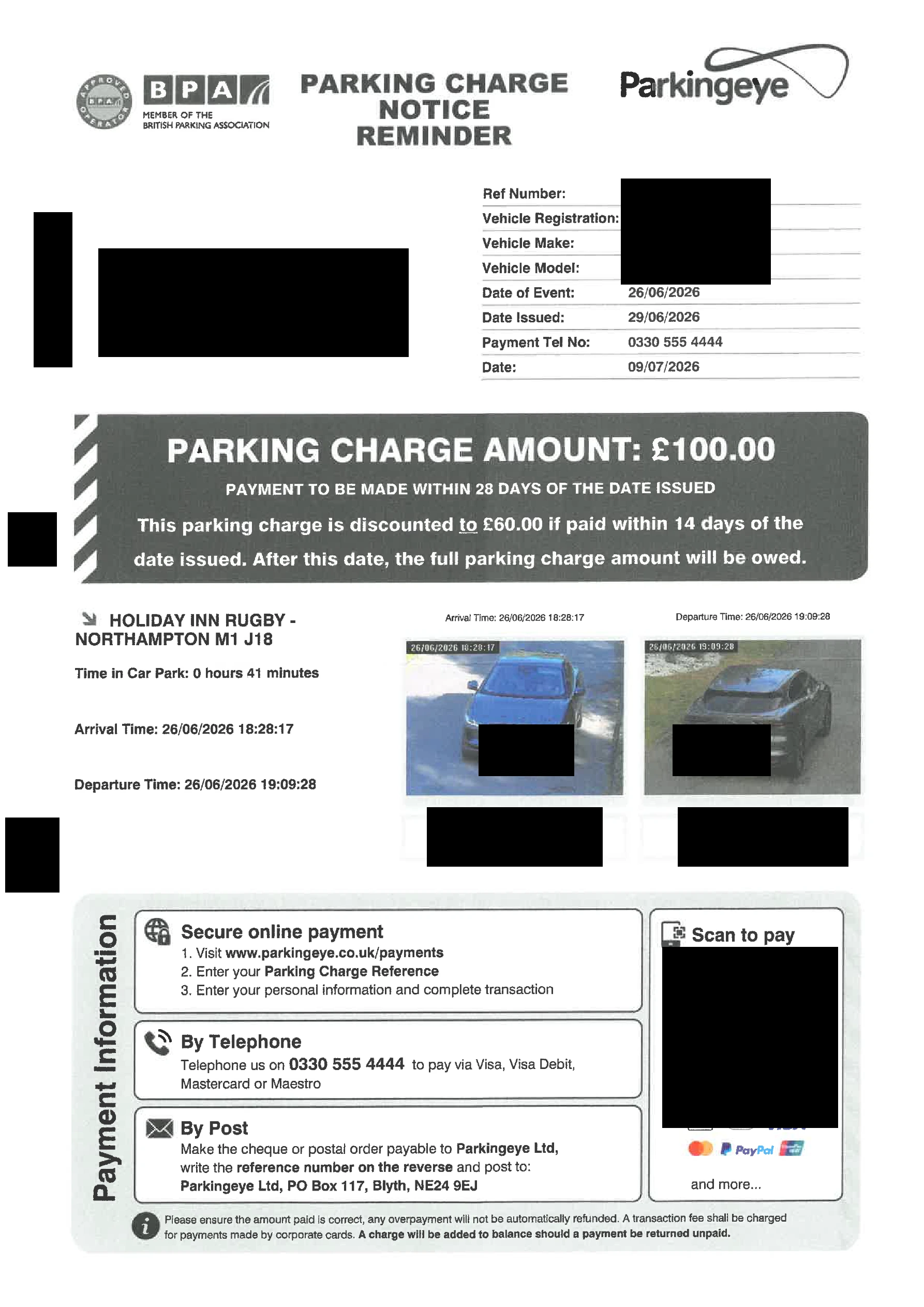
The redacted ParkingEye notice, page 1 of 2.
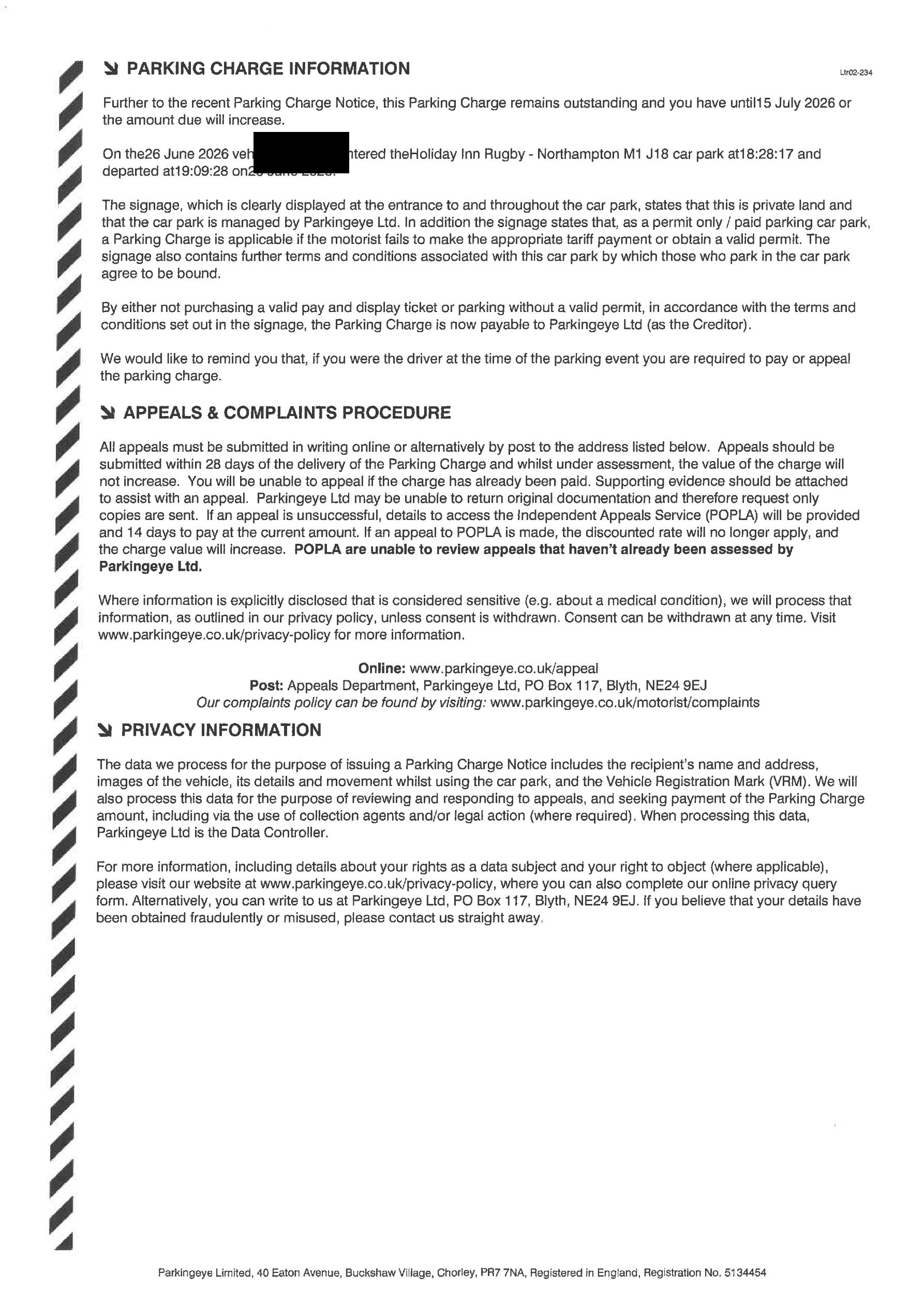
The redacted ParkingEye notice, page 2 of 2.
The notice records the vehicle entering at 18:28:17 and leaving at 19:09:28. It describes the stay as 41 minutes and demands £100, reduced to £60 if paid within 14 days.
Before appealing, I tried to contact the hotel. I emailed on 11 July and made 18 calls between 11:15 and 13:10 that day. I called again at 07:41 on 12 July and at 09:51 on 13 July. I received an automated email acknowledgement but did not get the issue resolved through the venue, so I submitted the operator appeal on 13 July.
I kept those contact attempts in my own records, but they are not part of the public evidence pack below. The useful point for the appeal was simple: I had tried the venue route promptly and then moved on before more time passed.
What I submitted
I had used the PoGo charger and made two purchases inside the hotel. The charging session ran from 18:29:44 to 18:45:56, delivered 24.50 kWh and cost £14.66.
The charging receipt was the clearest starting point because it recorded the activity that brought me to the site. Its start time was less than two minutes after the ANPR arrival time. Its end time also sat comfortably inside the recorded visit.
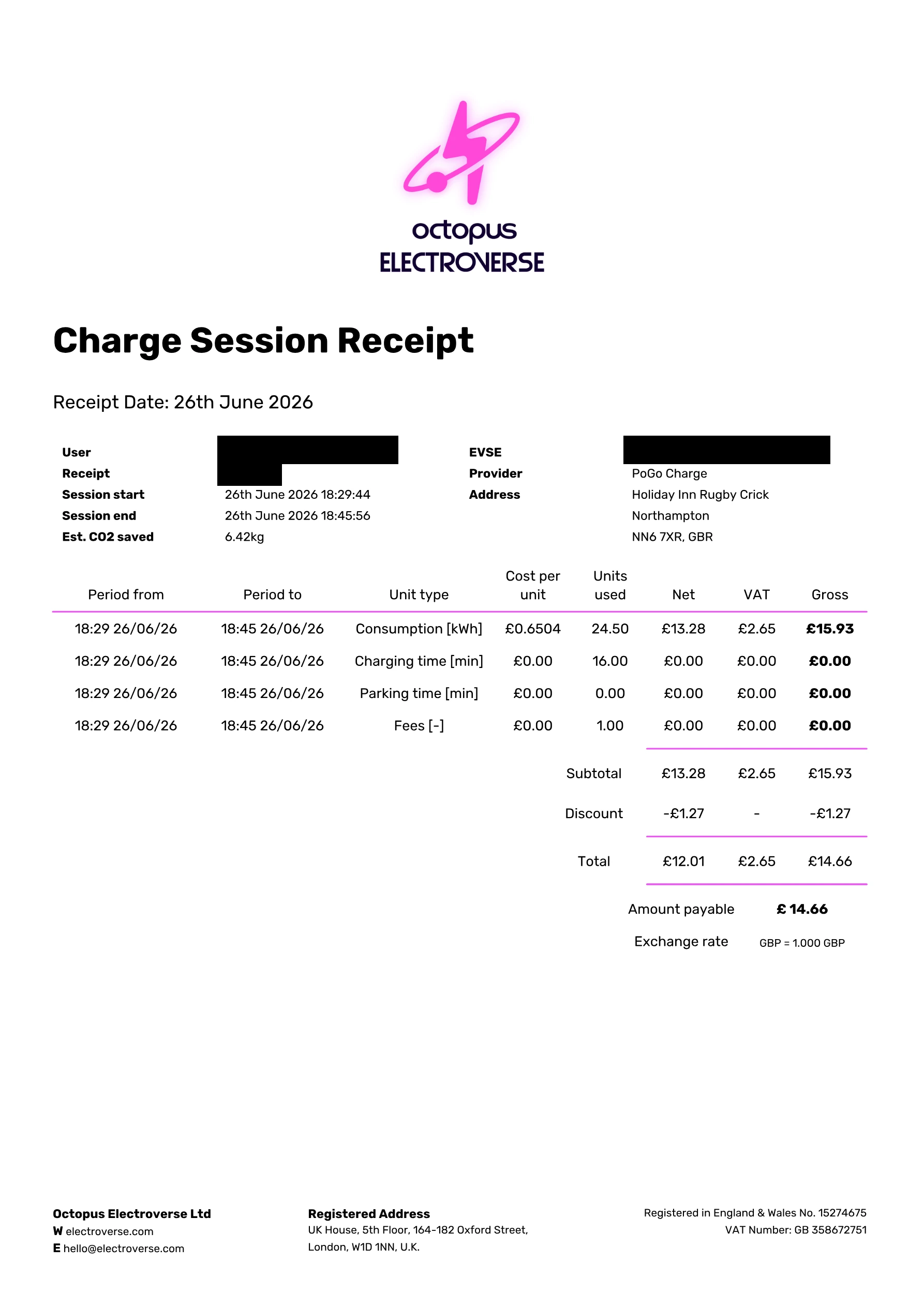
The redacted charging receipt.
The hotel payments were £15.45 at 18:42 and £4.95 at 18:50. Together, the records place the charging session and both purchases within the ANPR-recorded visit.
The first payment was made during the charging session shown in the receipt. The second was made later, before the car left the site. Putting those records beside the notice made the sequence much easier to follow than a long description on its own.
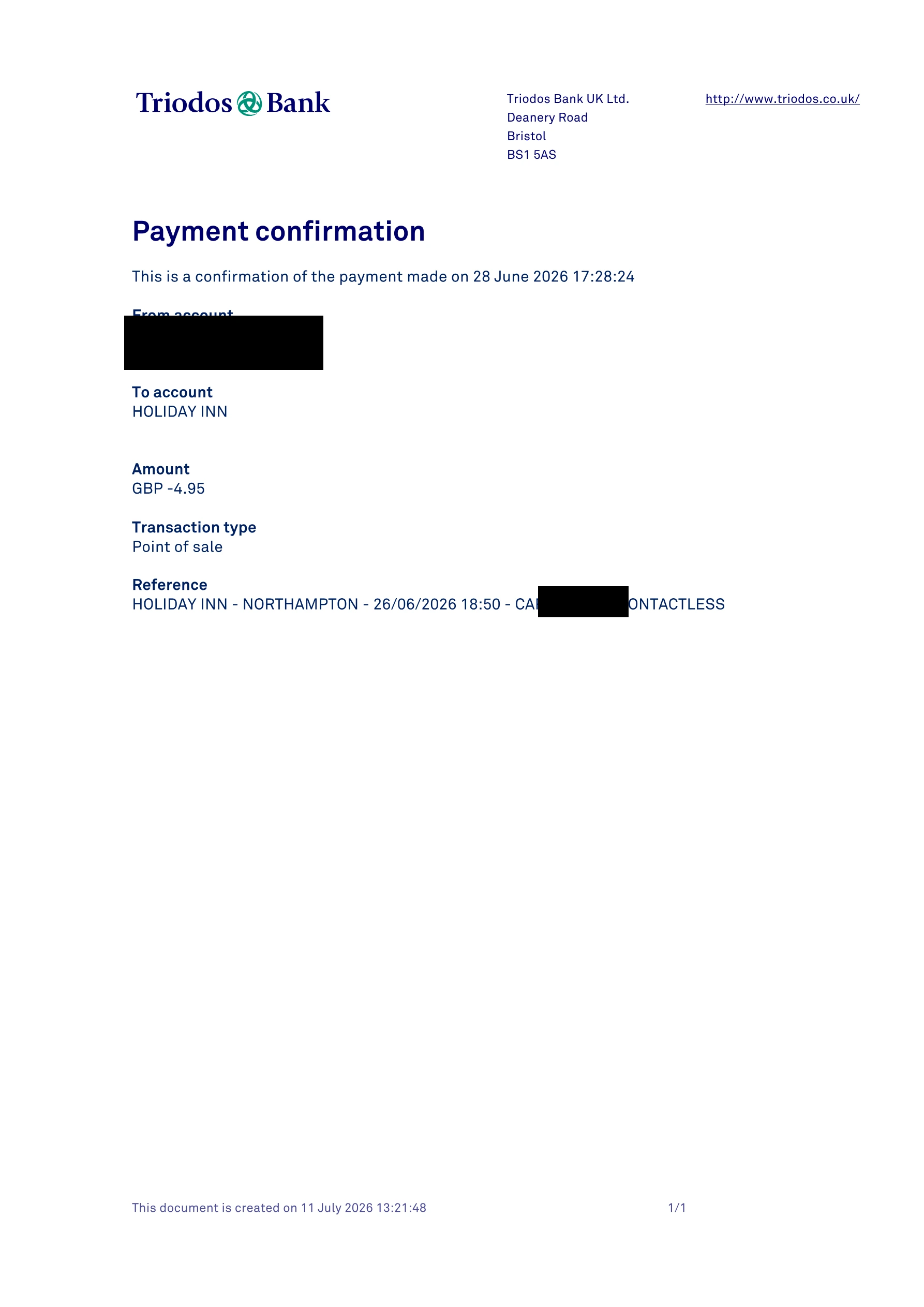
The first redacted Holiday Inn payment confirmation.
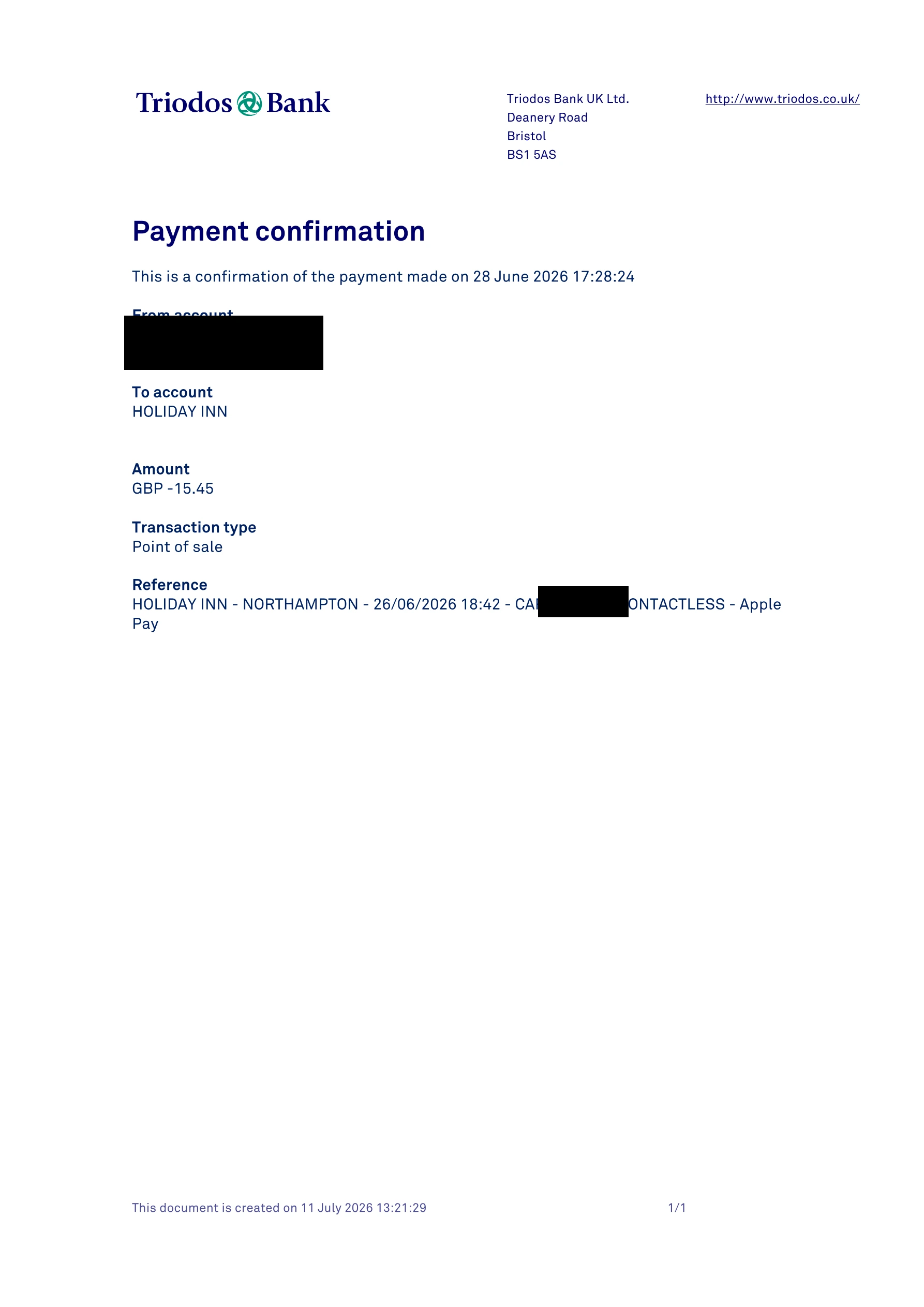
The second redacted Holiday Inn payment confirmation.
These documents show what I bought and when. They do not mean that using the charger or hotel automatically removed any separate parking or vehicle-registration requirement.
That distinction shaped the appeal. I did not argue that a receipt acted as a parking permit. I used the records to support the factual account of why I was there, what I was doing and when each part of the visit happened.
What the app produced
I created PCN Appeal Assistant and used it to prepare this appeal. I entered the PCN details and my account of what happened, selected the grounds I thought applied and supplied the receipts as evidence. The app assembled those inputs into the letter. I reviewed the finished letter and submitted it myself through ParkingEye's portal.
The three pages below are the complete generated appeal-letter body in order. Only identifying information has been redacted. The duplicated evidence appendices are omitted because the charging receipt and both hotel payment confirmations are shown separately.
Showing the whole generated body matters here. Selected quotations would make it difficult to judge how the facts, grounds and evidence fitted together. The complete body pages show exactly what the paid PDF contained.
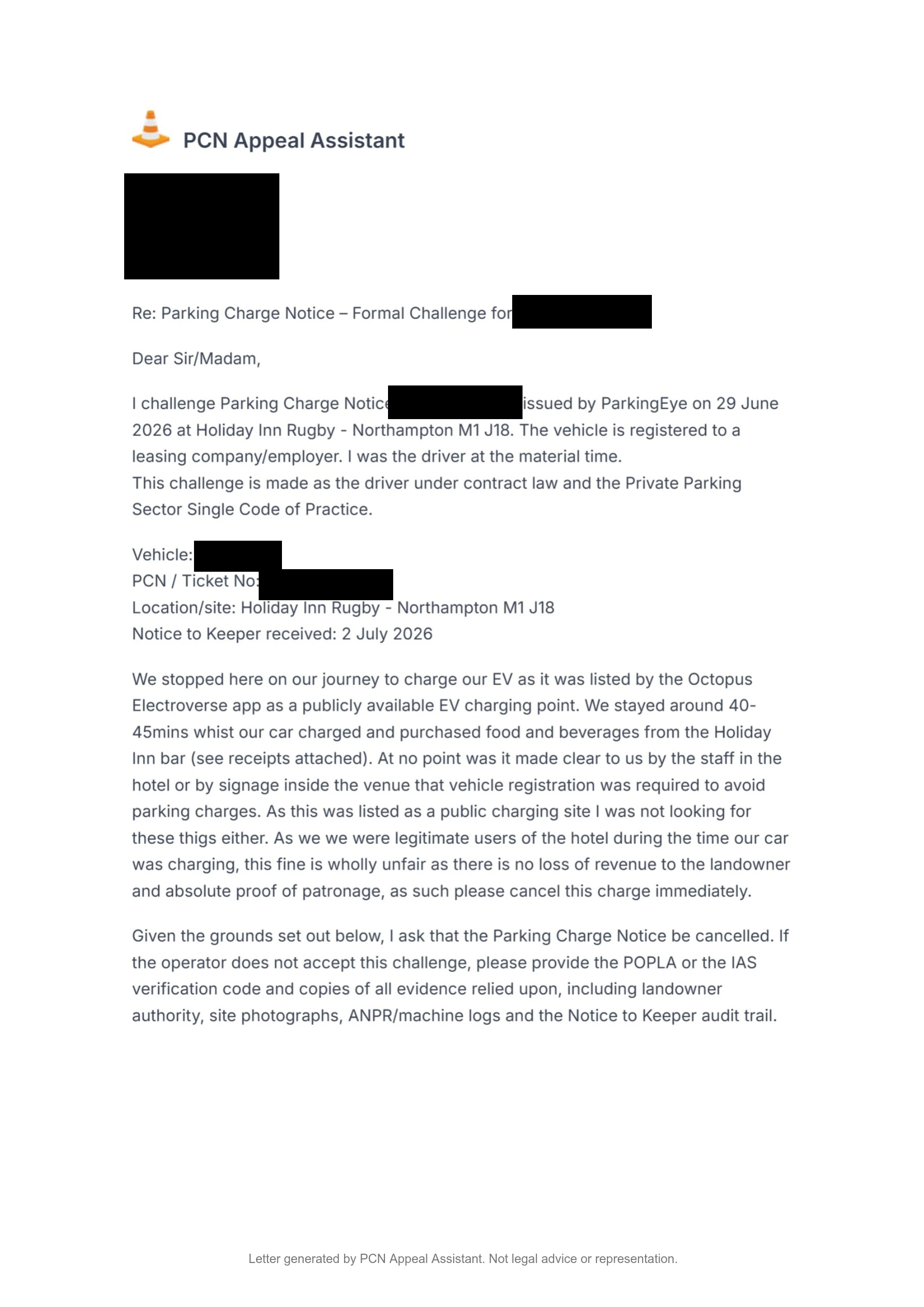
The complete redacted appeal-letter body, page 1 of 3.
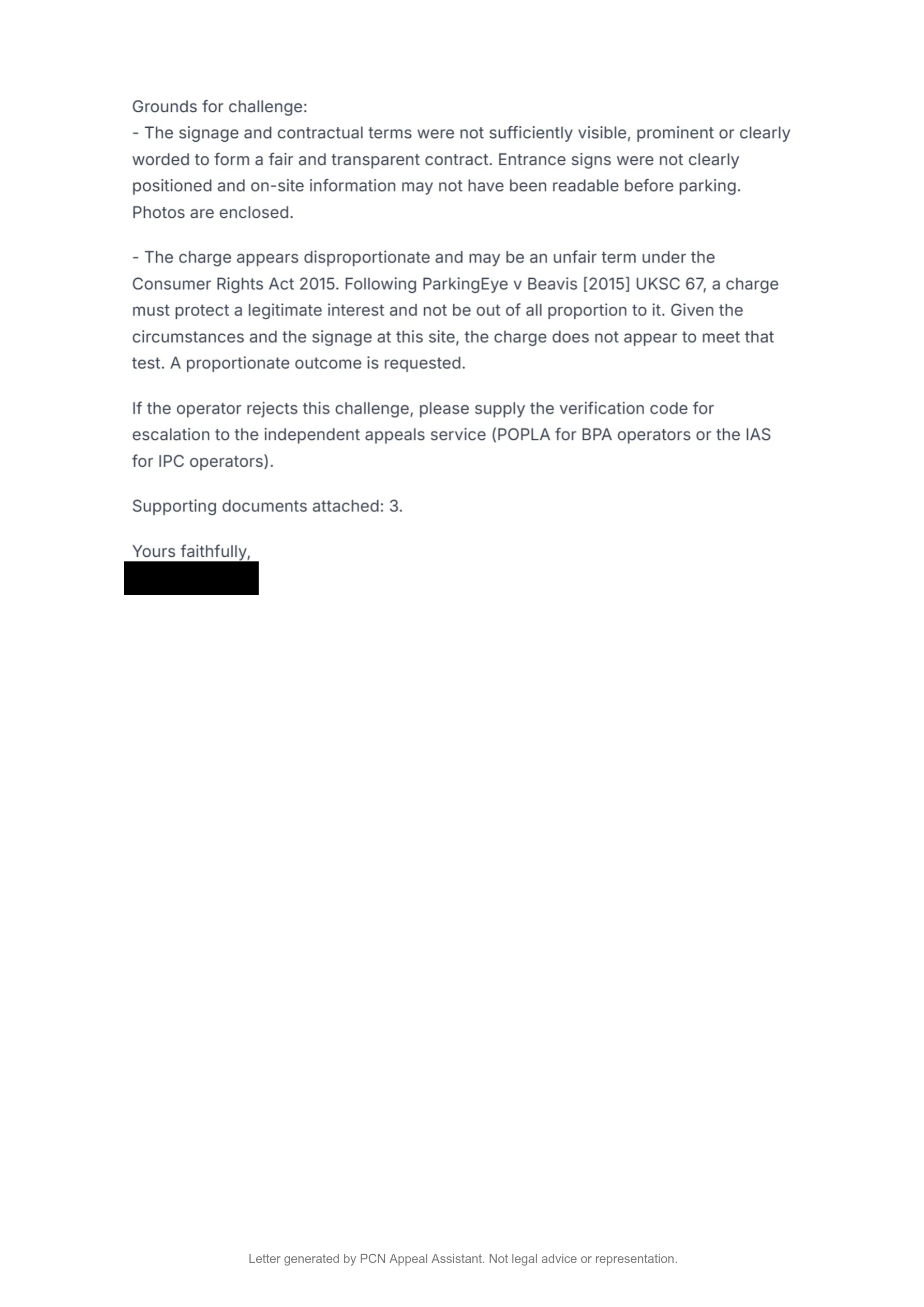
The complete redacted appeal-letter body, page 2 of 3.
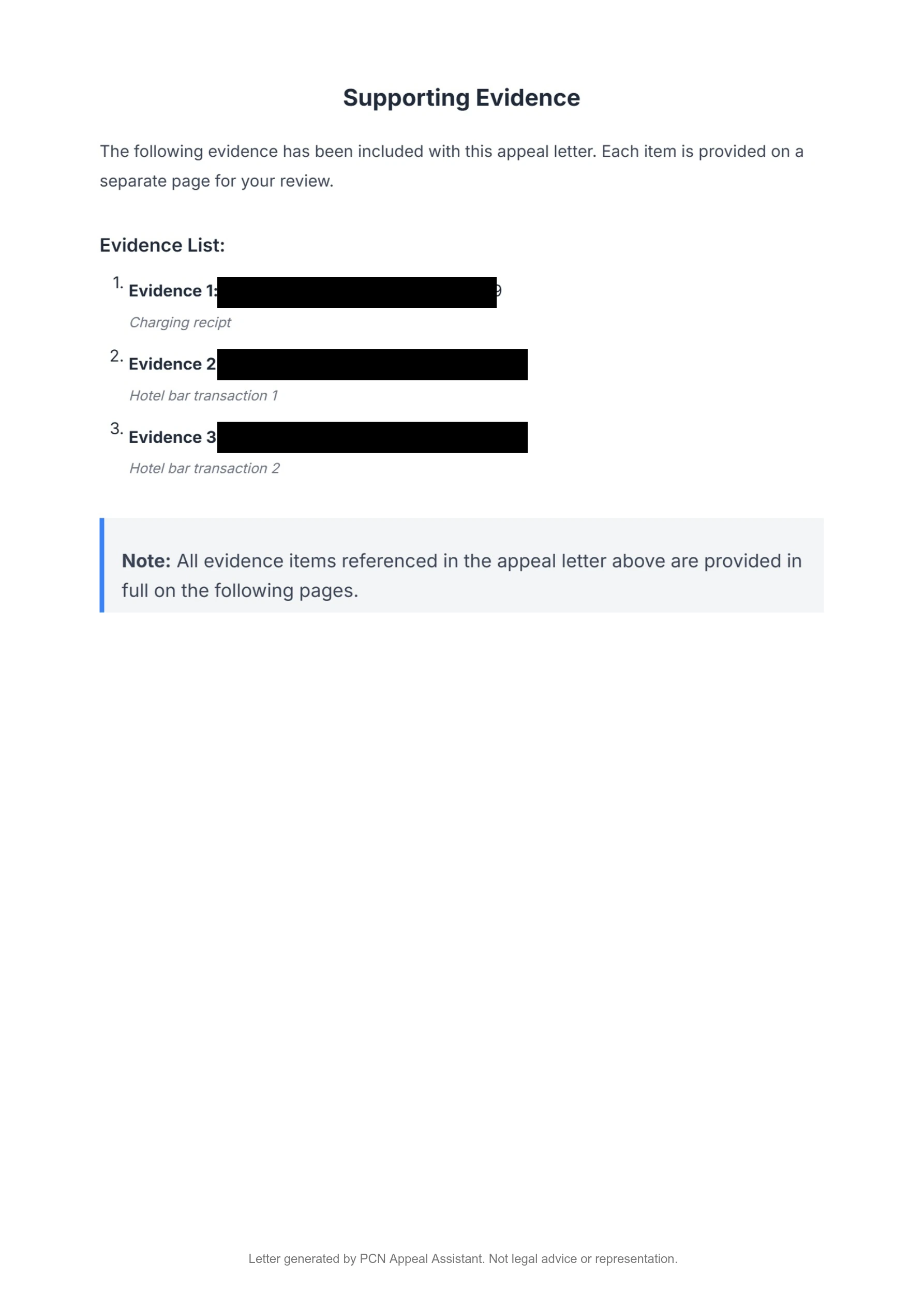
The complete redacted appeal-letter body, page 3 of 3.
ParkingEye's response
ParkingEye replied on 22 July 2026. It confirmed that the charge had been cancelled and there was no outstanding payment. It did not explain why it made that decision or identify a particular receipt or appeal ground.
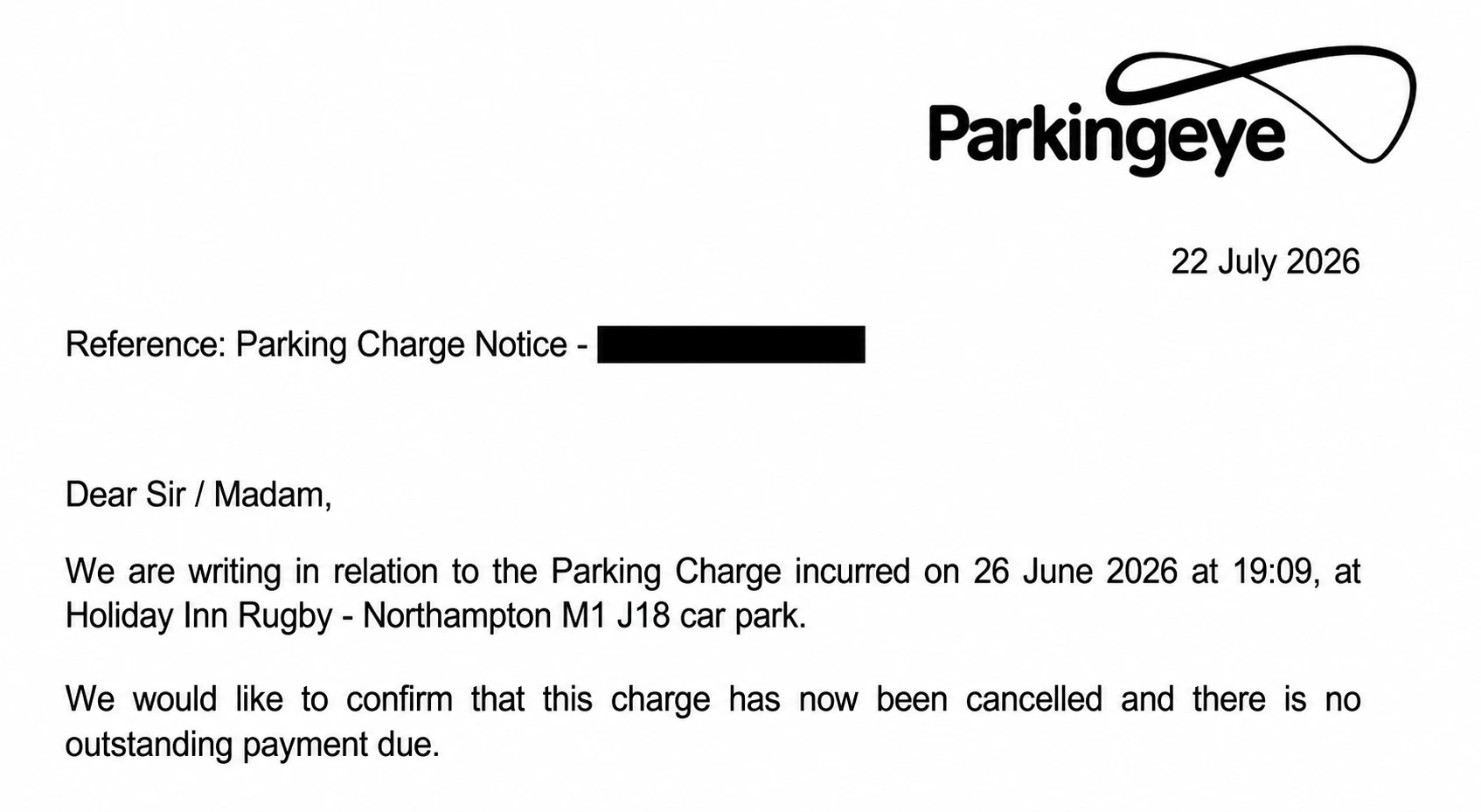
ParkingEye's redacted cancellation response.
Key takeaways
The practical lessons from this case are straightforward:
- Keep receipts, charging-app records and photographs. Small records become much more useful when they can be matched to the notice.
- Contact the venue promptly, but keep track of the operator's deadline. A venue response may not arrive in time.
- Put the events in date and time order. A clear sequence helps the reader understand the visit without guesswork.
- Include evidence that supports each factual statement. Avoid asking one document to prove more than it actually shows.
- Review the generated letter before submitting it. Check names, dates, amounts, selected grounds and every attachment.
For wider guidance, see the ParkingEye appeal guide, ANPR evidence guide, appeal-deadline guide and general PCN appeal guide.
Guidance and the letter preview are free. The optional completed PDF costs £4.99 as a one-off payment. You can start an appeal when you are ready.
Want a step-by-step appeal letter? See our complete PCN appeal guide or start your appeal letter now.